 Jonathan Blake

If you miss five calls a week and one in four of those callers would have booked a $400 job, you lose about $500 a week. That is $26,000 a year from a phone that rang while you were busy doing the work. I sold face to face since 2015, ran a tree service for six years, and now co-own The Lead Venture, so I have watched this happen from both sides of the phone.
Short answer: a missed call text back is a workflow that texts a caller within seconds of an unanswered call and keeps the conversation going until a human takes over. It costs a few dollars a month in usage, takes under an hour to build in HighLevel, and gets a second shot at the callers who would otherwise go to the next name on Google.
What a missed call text back is (and the math for your business)
Someone calls. Nobody picks up. Instead of silence, they get a text that says, in effect, “Sorry we missed you, how can we help?” They reply while the problem is still on their mind, and you are back in the conversation.
Before you build anything, work out what you are losing. Use your own numbers:
If a text back wins even a quarter of those jobs, you can see what it is worth. This is the same logic I use in my AI agency guide: sell the recovered job, not the software. The calls have to come from somewhere, and I compared every source for HVAC and roofing if you want to fill the phone first.
Missed call calculator
Plug in your own numbers. The starting values are examples, not data about your business.
-
Lost revenue per month
Add your numbers
-
Lost revenue per year
Add your numbers
Why texting back works
The behavior is simple. People call when they have a problem, and they call the next business when you don’t answer. Marchex analyzed 8.7 million calls to US auto service centers and found that 68% of callers who didn’t reach the business on the first try didn’t call back. They don’t leave a voicemail and wait. They move on.
A missed call is not a lost lead. A missed call with no reply is.
This is the idea behind speed to lead: the business that responds first usually gets the conversation. A Harvard Business Review study of online leads found that most companies were not responding nearly fast enough. A text lands in seconds, it is easier to answer than a voicemail, and the caller can reply from wherever they are, even if they can’t talk.
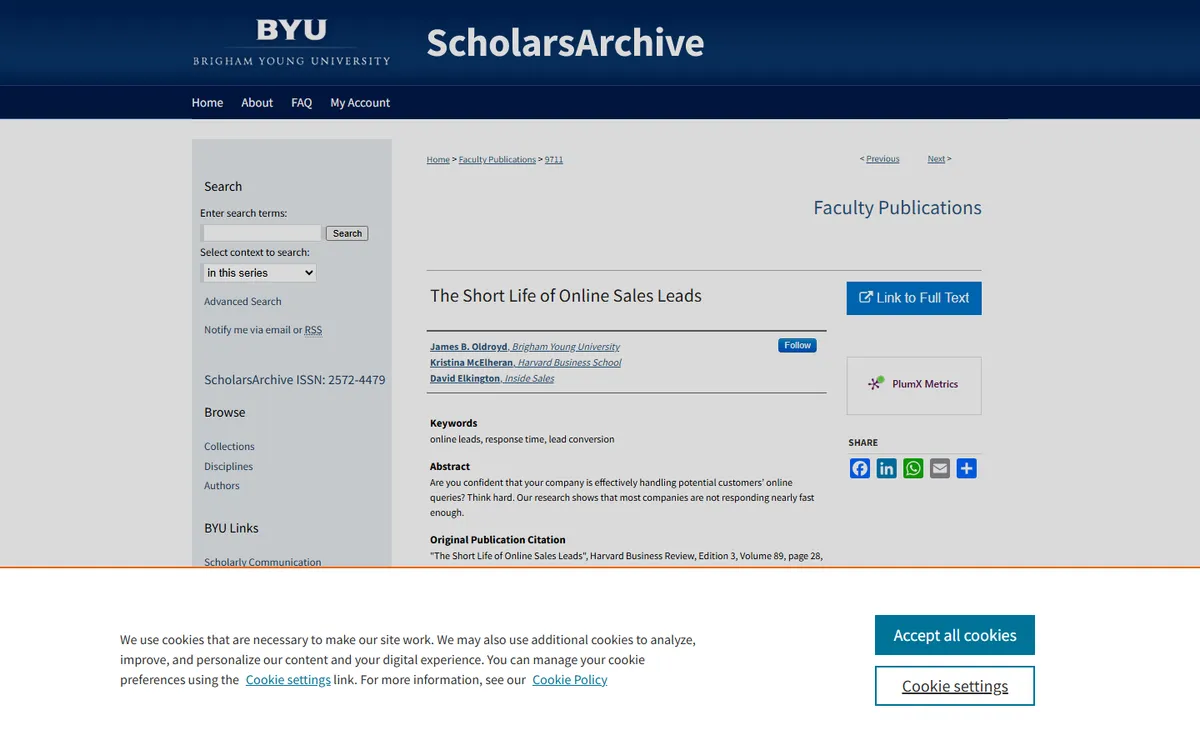 The Short Life of Online Sales Leads, Harvard Business Review, via BYU ScholarsArchive.
Do this today: open your call log, count the missed calls from the last 30 days, and put a dollar figure on them using the math above.
The play, step by step
Trigger
The trigger is any inbound call that ends without a conversation: no answer, a voicemail left, or a hang-up after ringing. Don’t text callers who talked to you for several minutes. They were answered.
Text 1: sent in seconds
Send the first text within 5 to 30 seconds of the missed call. Faster feels like magic. A delay of ten minutes feels like a follow-up, and by then they may be calling someone else.
Rules for the first text: say the business name, say you saw the call, ask one easy question, and include opt-out language. No links, no pitch.
Follow-ups
If they don’t reply, send two light follow-ups, not ten:
- About 2 hours later (during business hours): a short nudge with a second easy question.
- The next morning: a last check-in that gives them an easy way out.
Then stop. Three messages in total is enough. More than that stops feeling helpful.
Hand-off to a human
The text is not the sale. It is the doorway. The moment the caller replies, the automation should stop, create a task or notification for a real person, and let that person take over. A reply at 2 pm that gets a human answer at 2:05 is how you win the job.
Speed to lead is a promise you can automate, but the follow-through still has to be human.
The after-hours version
If the call comes in outside business hours, use a different text. Tell them when you will be back, offer to book a time by reply or link, and make sure the follow-up goes out at a sensible hour. A call at 9 pm shouldn’t get a second text at 9:05 pm.
Do this today: write your first-text wording and your after-hours wording in a notes file before you open HighLevel.
Copy-paste text templates
Change the names and details. Keep them short.
Law firms and other regulated businesses should keep the first text generic, because texts aren’t a private channel. If you are not sure what you can say, ask your compliance person before you launch.
Do this today: pick the template closest to your business, rewrite it in your voice, and read it out loud. If it sounds like a robot, change it.
Build it in GoHighLevel
This is the missed call text back GoHighLevel workflow I build for every account. If you haven’t set up your phone number and registration yet, start with my GoHighLevel setup guide first. The workflow does nothing without a working LC Phone number.
- Create the workflow. Go to Automation, then Workflows, then Create Workflow, and start from scratch. Name it “Missed Call Text Back.”
- Add the trigger. Choose Call Status. In the filters, set the call status to no-answer (add busy and voicemail if your account offers them) and the direction to inbound. Use the filter that matches calls to your main number.
- Add a tag. Add an action that adds the tag
missed-call. You will use it for reporting later. - Add a business-hours If/Else. Use an If/Else on the current time or a time window. One branch is “Business hours,” the other is “After hours.”
- Business-hours branch, Send SMS. Use Text 1 above. Merge in the contact’s first name if you have it, but most missed calls come from unknown numbers, so don’t depend on it.
- Wait for reply. Add a Wait step set to “Wait for contact reply” with a timeout of 2 hours.
- If/Else on reply. If the contact replied, add an internal notification (SMS or app notification) to the owner or front desk, create a task called “Reply to missed call lead,” and remove the contact from this workflow. If not, send the 2-hour follow-up.
- Second wait and next-morning text. Add a wait until 9 am the next day, send the final text, and end the workflow.
- After-hours branch. Send the after-hours text, wait until the next business day at 9 am, check again for a reply, and use the same notification and task steps.
- Create an opportunity. For anyone who replies, create an opportunity in your pipeline so the lead shows up in your numbers.
- Test it. Call your number from a different phone and let it ring out. Check the text arrives, reply, and make sure the notification fires. Then call at an off-hours time and test the other branch.
Exact menu names shift as HighLevel updates the builder, so if a label is slightly different, look for the closest match. The logic stays the same. If you want the AI version that can actually hold a conversation, see my GoHighLevel AI agents guide.
Start your free HighLevel trial 30-day trial · cancel anytime · keep the bonuses I may earn a commission if you sign up through my link, at no extra cost to you. DetailsDo this today: build the workflow in a test account, call yourself, and watch the whole flow run.
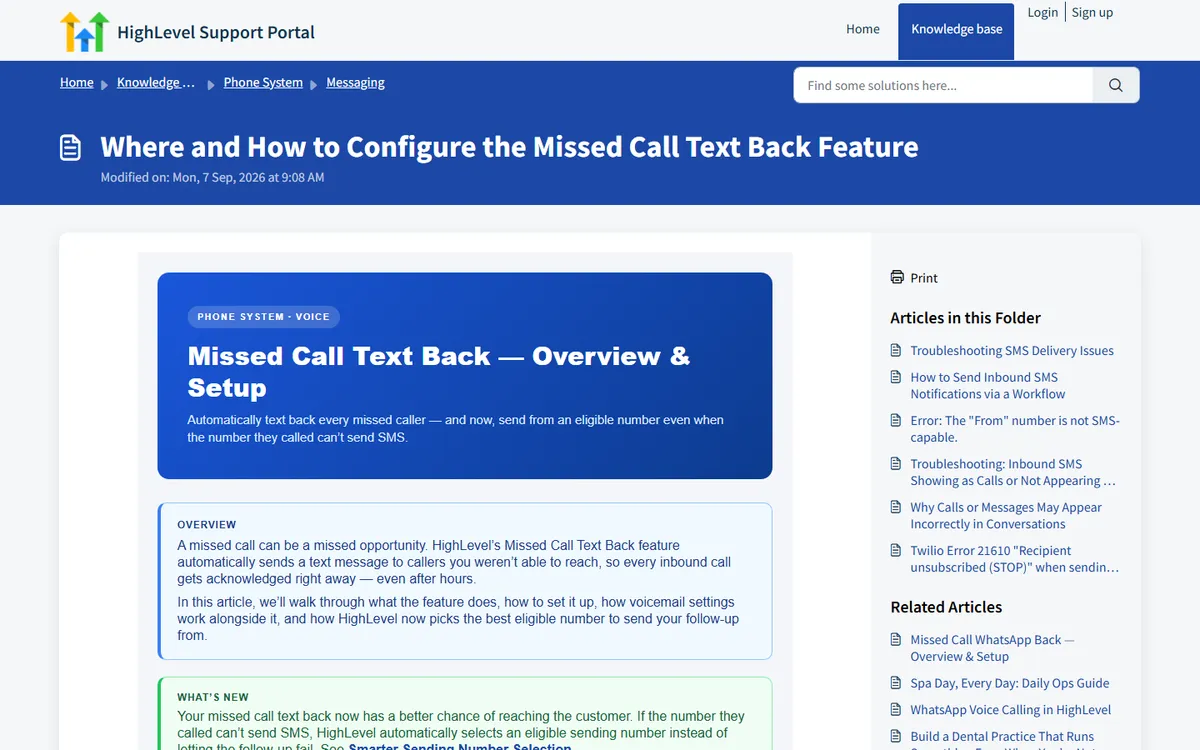 HighLevel’s help article on its built-in missed call text back feature, a simpler option than the full workflow, November 2026.
Rules that keep you out of trouble
This is not legal advice, but these are the basics I follow.
- Register for A2P 10DLC. US carriers require business texting to be registered. In HighLevel that means a brand registration and a campaign registration. Approval can take days, so start it before you build. Unregistered texts can get filtered or blocked. See my pricing breakdown for what registration costs.
- Put opt-out language in the first text. “Reply STOP to opt out” is the standard. Honor it immediately and don’t text that number again.
- Respect quiet hours. Don’t send follow-ups late at night or very early. I keep follow-ups between 8 am and 8 pm in the contact’s local time. Some states are stricter, so check yours.
- Think about consent. A caller who rang you is reasonably expecting a reply about that call. That is different from adding them to a marketing list. Keep the message about their call, and don’t add them to promotions without proper consent.
- Keep sensitive details out. Medical, legal and financial details don’t belong in a first text.
Cost for context: LC Phone charges $0.00747 per SMS segment, $1.15 a month for a local number, and carriers add their own registration and message fees. A few hundred automatic texts a month is a few dollars. Prices are as of the publish date and change, so check HighLevel’s help center.
Do this today: start your A2P registration now, even if the workflow isn’t built yet.
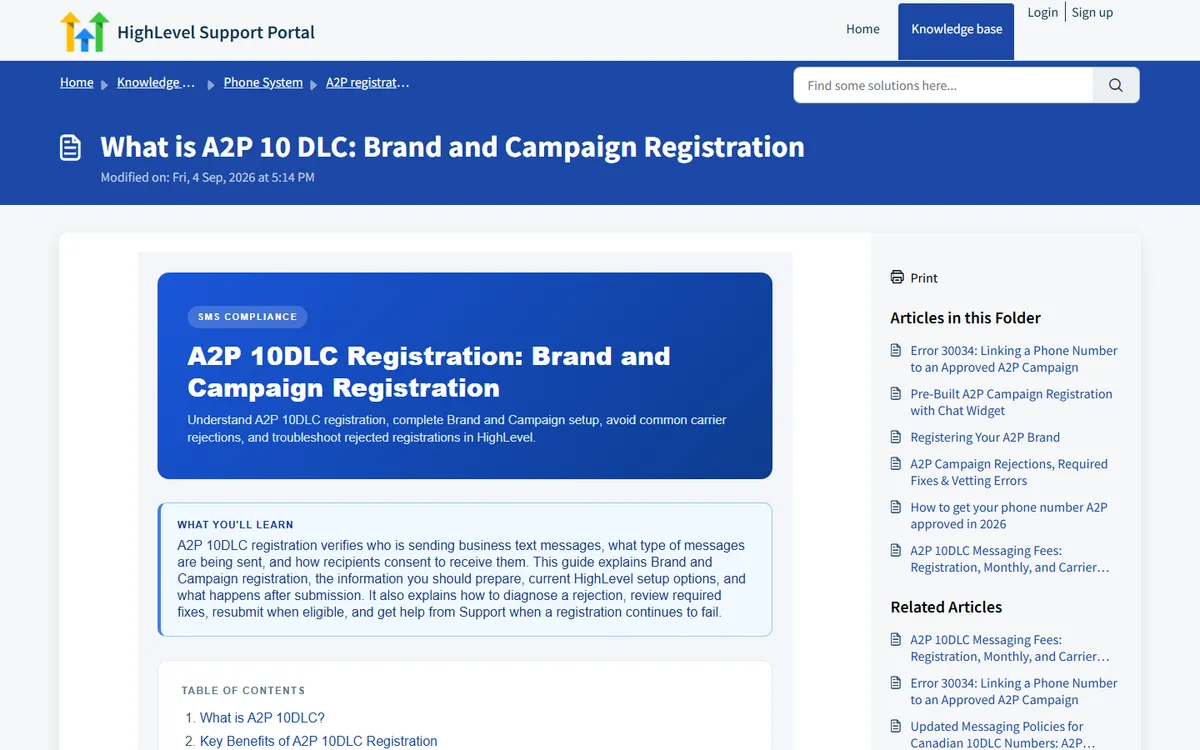 HighLevel’s help article on A2P 10DLC brand and campaign registration, November 2026.
How to measure it
Check three numbers every week. Put them in a spreadsheet or a HighLevel dashboard using the missed-call tag.
- Missed calls texted. How many missed calls triggered the workflow. This tells you how big the leak was.
- Reply rate. Replies divided by texts sent. If it is under 15 to 20%, rewrite the first text and check that it is sending quickly.
- Booked jobs or appointments from replies. The number that matters. Multiply by average job value and compare to the number you calculated at the start.
When I say results here, I mean mine. Your reply rates and bookings will depend on your market, your offer and how fast a human picks up the conversation. These were my results based on my experience. Your results may be different.
Do this today: add a weekly 10-minute calendar reminder to check those three numbers.
Want something that answers the call instead of texting after it? See my answering service guides by industry.
Selling this to clients (agencies)
If you run an agency, this is one of the easiest things to sell, because the owner can see the problem on their own phone. The offer I’d use is a free missed-call audit.
- Ask the owner to send you a screenshot of their last 30 days of missed calls, or have them forward their call log.
- Count the missed calls and run the math from earlier with their job value and close rate.
- Show them a one-page number: “You missed 23 calls last month. At your average job, that is roughly $X of work.”
- Offer to set up the text back for free for 14 days, then a monthly fee. Our plans at The Lead Venture run $97 and $297 a month, and I explain how I think about pricing in my AI agency guide.
- Run the demo on their own phone during the call. Seeing a text arrive after a missed call sells it better than any slide.
Quick wins
Want clients this month? Start here
Set up your own house first. One clear offer for one niche, a simple site, a booking link and your own HighLevel account running the same automations you'll sell. Prospects trust what they can try.
Start with people who already know you
Past employers, old customers, friends who own businesses. Tell them exactly what you set up for local service businesses and ask for 20 minutes.
Do daily outreach
Calls, emails and DMs to a tight list in one niche. Volume and follow-up beat clever copy.
Demo, don't describe
Build a quick AI agent or missed-call text-back demo in your own HighLevel account and let them try it on the call.
Post what you build
Short screen recordings of real automations. One a day on the platform your buyers use.
Partner with people who own your buyers
Web designers, bookkeepers and software resellers already have the relationship. Trade introductions.
Answer every lead in under a minute
Practice what you sell. Set up your own speed-to-lead automation first.
Work a local area in person
- Pick one area and walk into ten businesses in a row. Ask for the owner, keep it to two minutes and leave a card.
- Bring a one-page printout that shows the problem you fix (missed calls, slow follow-up, no reviews) with their name on it.
- Go back a week later. Most first visits are about being remembered, not closing.
Ask for introductions, not referrals
"Know anyone who could use this?" gets a polite "I'll think about it." Asking to be introduced to a specific kind of person gets names. Set it up when they sign:
"If this works the way I think it will, would you be against introducing me to one or two other local service businesses you know? I'll give them a a free missed-call audit."
Then follow up once they're seeing results. With a client you get along with, a little humor works:
"So are you keeping me a secret on purpose, or do you just not like your friends?"
Only joke like that with clients you know well. With everyone else, keep it simple and thank them either way.