 Jonathan Blake
If you searched for HVAC lead generation, you probably fall into one of two camps. Either you are slammed during heat waves and cold snaps and dead the rest of the year, or you are paying for leads and cannot tell if they are worth it.
I sold face to face since 2015, ran a tree service for six years, and now co-own The Lead Venture (TLV), an agency that runs lead systems for home service businesses. I never ran an HVAC company, but I know the pattern from tree work: storm season floods the phone, then it goes quiet. HVAC has the same swings, driven by temperature instead of wind.
Short answer: build a steady base with your Google Business Profile, reviews, referrals and maintenance agreements. Add one paid source, such as Google Local Services Ads or Google Ads, and track it by booked jobs. Then fix what happens after the lead arrives, because in a hot week the shop that answers first wins.
How to get more HVAC customers: the honest map
Most guides list the same twelve sources and stop. What they skip is what each one costs you in time and money, how fast it works, and how good the leads are. I kept cost qualitative on purpose, since ad prices change by city and season and I would rather you check your own market.
| Lead source | Cost type | Speed to results | Lead quality | What it takes |
|---|---|---|---|---|
| Google Business Profile | Free, your time | Weeks to months | High, they are searching now | Complete profile, steady reviews, real photos |
| Local SEO website | Upfront build, then low ongoing | Months | High | Service pages by city, fast mobile site, easy booking |
| Google Local Services Ads | Pay per lead | Days to weeks | High intent, some wasted leads | Verification, fast answers, disputing bad leads |
| Google Ads (search) | Pay per click | Days | High intent when set up well | Call tracking, tight keywords, strong landing page |
| Facebook and Meta ads | Pay per lead or click | Days | Mixed, best for tune-up offers | Good creative, instant follow-up |
| Shared lead vendors (Angi, HomeAdvisor, Thumbtack) | Pay per lead, often shared | Immediate | Mixed, many competitors per lead | Instant response, price discipline |
| Exclusive leads | Pay per lead, higher | Fast | Usually better than shared | Trusted vendor, tracking |
| Referrals | Cheap, a small thank-you | Slow but steady | Highest | Ask every time, make it easy |
| Door hangers and neighborhood work | Mostly your time | Same day | Warm, your truck is right there | A pitch and local rules |
| Seasonal campaigns | Varies | Fast, then it ends | High urgency | Prepare before the first hot or cold week |
| Past-customer reactivation | Almost free | Days | Warm | A list and a follow-up system |
| Maintenance agreements | Low ongoing | Builds over a year | Highest, they already trust you | An easy offer and renewal reminders |
Now the part that tells you which rows are for you.
Two kinds of HVAC customers
It helps to split your leads into two groups, because the buying behavior is completely different.
The emergency caller. The system died, it is 95 degrees, or the furnace quit in January. In HVAC, the customer with no air conditioning does not shop. They call until someone picks up. Speed and availability win this job. Price comes second.
The planned buyer. They want a tune-up, a quote on a new system, or a second opinion on a repair. They research, read reviews, and compare two or three companies. Trust and proof win this job.
Most HVAC lead sources favor one group. Search ads and Local Services Ads catch emergencies. Reviews, referrals, maintenance agreements and your website catch planned buyers. A healthy shop covers both.
The free and cheap sources (start here)
Google Business Profile
When someone searches “ac repair near me,” the map results usually show before the website results. Your Business Profile is what shows up there. Google says local ranking depends on relevance, distance and prominence, and a complete, accurate profile helps all three.
What to do: pick the right primary category, list every service you perform (repair, installation, tune-ups, duct work, indoor air quality), set your service area honestly, add real job photos monthly, and answer every review. A profile with fresh photos and a steady stream of reviews beats one that has sat untouched.
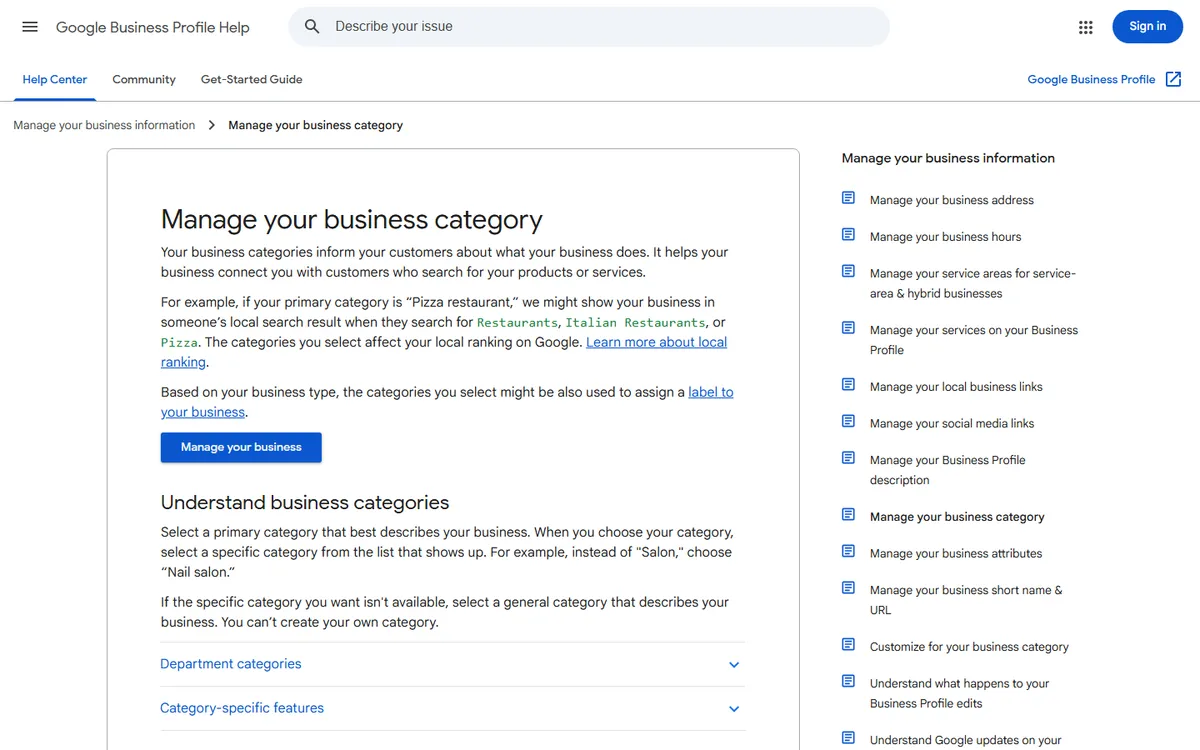 Google’s help article on business categories. Your primary category affects which searches you show up for, November 2026.
The catch: it is a habit, not a project.
A local SEO website
Your website is where a profile click becomes a call. For HVAC it needs a page for each service, a page for each area you really serve, and an obvious way to call or book. Make the number tap-to-call, keep the form to about five fields, and put “same-day service” or your response window up front if you can honor it.
The mistake I see most is a site that looks good and does not tell a sweating homeowner what to do next. If you need a starting point, the free 31-page website template in the tools below is a decent skeleton.
Referrals
Referrals close at the highest rate because the customer already trusts you. They also happen less than they should because techs never ask. Make it part of the job: when the work is done and the customer is happy, the tech says “if a friend or neighbor needs heating or cooling help, we’d appreciate the referral.” Then make it easy with a card or a text they can forward.
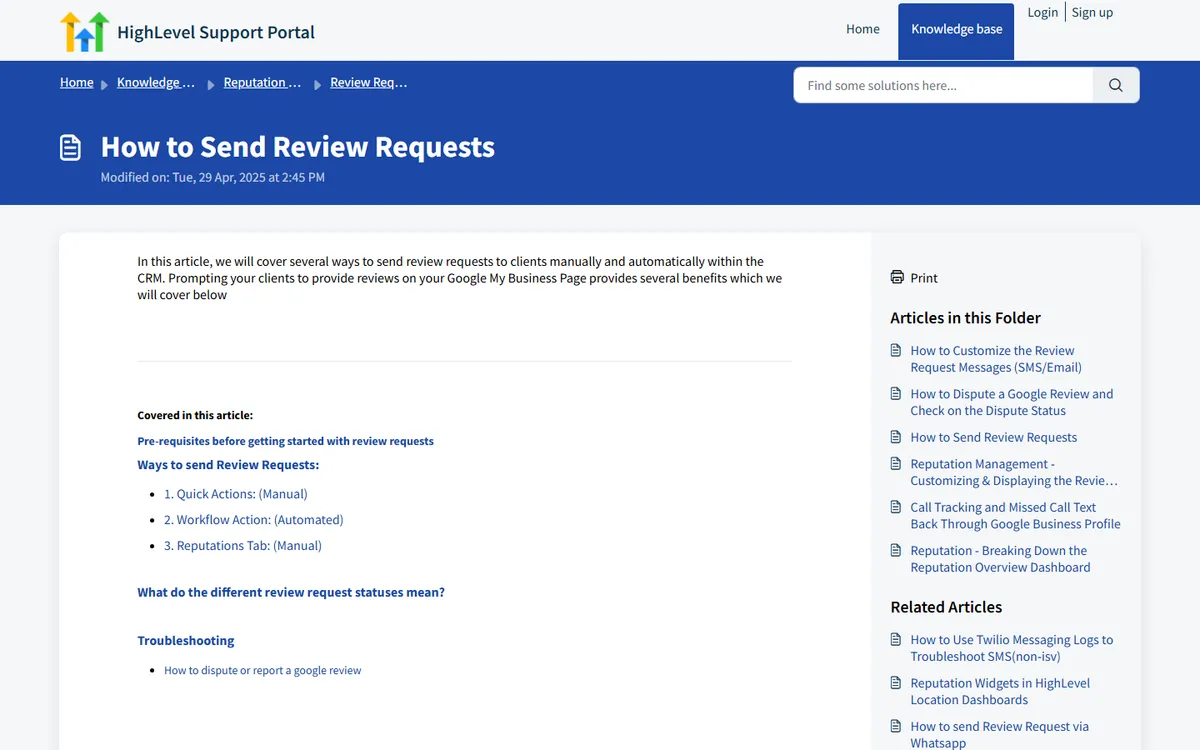 HighLevel’s help article on sending review requests by hand or automatically from a workflow, November 2026.
Door hangers and neighborhood work
When your truck is parked at a job, the neighbors notice. A quick door hanger on the homes nearby with a tune-up offer turns a single service call into several. Use the same rules I give roofers: check your local solicitation rules, honor no-soliciting signs, and never invent a problem you did not find.
Past-customer reactivation
Your best list is everyone you have already served. A text or email before the first hot week and the first cold week (“we are booking tune-ups before the season, want me to save you a spot?”) brings back work you already paid to find. I wrote about the full play in my database reactivation guide.
Maintenance agreements
A maintenance agreement is a lead source you only have to win once a year. The customer pays a modest recurring fee for scheduled tune-ups, and you get steady work in the shoulder seasons, a standing reason to contact them, and first call when their system finally gives out.
What it takes: a simple offer (two visits a year, priority scheduling, maybe a discount on repairs), a line on every invoice and a pitch at the end of every visit, and automatic renewal reminders. Most shops sell too few agreements because the tech never asks. Make it the last thing on every job.
The paid sources (fast, but read the fine print)
Google Local Services Ads
Local Services Ads sit at the top of local search and carry a Google badge in many markets. You pay per lead rather than per click, and Google verifies your business first. Availability depends on your area and trade, so check Google’s current requirements for your market.
 Google’s Local Services Ads page, November 2026.
What it takes: license and insurance checks, a complete profile, and fast answers, because responsiveness affects how you show up. Quality is high because people are actively looking, but you can still pay for leads that were never a fit, so dispute those.
Google Ads (search)
Search ads put you in front of someone typing “furnace not working” or “ac repair near me” at the exact moment they need help. It is the fastest way to get HVAC leads on demand. It is also easy to waste money on if you do not track calls, your keywords are loose, or your landing page does not convert.
What it takes: call and form tracking, tight keywords with negatives (so you stop paying for “hvac jobs” and “hvac training”), and a landing page built around one action. If you cannot say how many of last month’s clicks became booked jobs, do not scale this yet.
Facebook and Meta ads
Meta ads reach people who were not searching, so they are weaker for emergencies and better for planned work: tune-up specials, maintenance plan offers, and retargeting people who visited your site. The leads cool off fast, so an instant text reply matters.
What it takes: a clear offer, simple creative, a short form, and fast follow-up. If you cannot reply within minutes, skip Meta for now.
Shared lead vendors versus exclusive leads
Angi, HomeAdvisor and Thumbtack sell leads, and many are shared with several contractors, so the homeowner’s phone starts ringing the moment they submit. You win on speed or price. Exclusive leads go to one contractor, cost more each, and generally convert better.
I will not say shared leads never work. Some shops make them pay by answering in seconds and tracking booked jobs. Others find the cost per booked job is too high. My rule: start small, tag every lead to a booked or lost job, and drop the source if it does not pay after a fair trial.
Seasonal campaigns
HVAC demand moves with the weather. The prep is what matters: write your ad copy, landing page, text templates and tune-up offers before the season, not during the first heat wave. Spring and fall tune-up campaigns smooth the swings, and a “before the cold hits” message in early fall tends to land better than one sent after the first freeze.
What happens after the lead arrives
This is the part most HVAC lead generation guides skip, and it is where shops quietly lose the most. You can pick the perfect source and still lose the job in the first few minutes.
In a heat wave your phones do not slow down, your techs are in attics, and the office is one person. Calls go to voicemail, and most people do not leave a message. They call the next company. I covered the research and the full workflow in my speed to lead guide, and the short version is that the first reply should come in minutes, not hours.
Here is what I would put in place before spending more on leads.
1. Never miss a call without a reply. A missed-call text back sends an automatic text the moment a call goes unanswered, so the customer knows you saw it and can say what is going on. For peak weeks, add a human or AI answering line. I wrote up that setup in my HVAC answering service guide.
2. Reply to every web and ad lead in seconds. An automatic text that says who you are and offers two time slots beats a call back the next morning.
3. Follow up on replacement quotes. A system replacement is a big decision, and most quotes sit. A text after one day, three days and a week, stopping the moment they reply, recovers jobs you already did half the work to win.
4. Ask for the review. Two days after the job, send one request with your Google review link. Reviews feed your profile, which feeds your next leads.
5. Track the source. Tag every lead with where it came from, and tag the booked and closed jobs the same way. Without that you cannot tell which source pays.
A CRM that keeps this together makes it easier. I compared the options in my HVAC CRM guide.
The math: cost per lead versus cost per booked job
Cost per lead tells you what you paid to start a conversation. Cost per booked job tells you whether the source is worth keeping.
Here is an example you can redo with your own numbers. These are round, made-up numbers to show the method, not benchmarks for your market.
| Step | Source A (cheap leads) | Source B (pricier leads) |
|---|---|---|
| Monthly spend | $2,000 | $2,000 |
| Cost per lead | $30 | $80 |
| Leads | 66 | 25 |
| Share you reach and book | 30% | 60% |
| Booked jobs | 20 | 15 |
| Cost per booked job | $100 | $133 |
On booked jobs alone, Source A still wins. Now add what the job is worth. If A’s leads are mostly small repairs and B’s are mostly replacement quotes, the picture flips, so track the average job value too.
| Step | Source A | Source B |
|---|---|---|
| Booked jobs | 20 | 15 |
| Average job value | $300 | $1,200 |
| Revenue | $6,000 | $18,000 |
| Revenue per $1 spent | $3 | $9 |
That is the point of tracking: the cheapest lead is not always the cheapest customer, and the source with the best cost per lead can have the worst return.
To redo it, divide spend by leads, multiply leads by your booking rate, multiply booked jobs by average job value, and divide revenue by spend. If you would rather skip the spreadsheet, the site’s calculators handle the math.
Cost per lead calculator
Plug in your own numbers. The starting values are examples, not data about your business.
-
Cost per lead
Add your numbers
-
Cost per customer
Add your numbers
Which source fits which HVAC shop
You do not need all twelve. A rough guide:
- New or small shop: Business Profile, reviews, referrals and a maintenance plan. Almost no ad money.
- Busy summer, dead spring and fall: Maintenance agreements and tune-up campaigns to fill the gaps.
- Steady but flat: Add Local Services Ads or Google Ads with call tracking, and fix your follow-up.
- Installers who want more replacements: Lean on reviews, quote follow-up and past-customer outreach for aging systems.
- Tempted by shared leads: Run a small, tracked test and judge by booked jobs and revenue.
Your first 30 days
| Week | Do this | Done when |
|---|---|---|
| Week 1 | Claim and complete your Google Business Profile, fix your hours and phone, add 15 real job photos, list every service | Profile is complete and photos are live |
| Week 1 | Turn on missed-call text back and write your first-reply text | A test call you miss gets a text within seconds |
| Week 2 | Ask your last 30 customers for reviews, and text 25 past customers about a tune-up | 10 or more review requests out and replies tracked |
| Week 2 | Write a simple maintenance agreement offer and add it to every invoice | Every tech knows the pitch |
| Week 3 | Set up replacement-quote follow-up texts at day 1, 3 and 7 | A test quote triggers all three |
| Week 3 | Add a five-field service form and tap-to-call button to your site | You can submit the form and it alerts your phone |
| Week 4 | Pick one paid source, set a small test budget and tag every lead by source | Tracking works and you know cost per lead |
| Week 4 | Review: calls missed, response time, jobs booked, jobs closed, revenue by source | You have a cost per booked job and revenue per source |
Want this done for you?
I will be straight about this: I co-own The Lead Venture, so I have a stake in what comes next. TLV runs lead systems for home service businesses, including HVAC. The system covers the parts above: it texts back missed calls, replies to new leads fast, follows up on quotes and asks for reviews.
TLV plans start at $97 a month, the full system is $297 a month, you pay $0 until it is live, and there are no contracts. You can read the details and decide:
If you would rather build it yourself, everything in this post works without TLV. The free website template is a decent starting point for the booking page.
Quick wins
Want clients this month? Start here
Set up your own house first. One clear offer for one niche, a simple site, a booking link and your own HighLevel account running the same automations you'll sell. Prospects trust what they can try.
Start with people who already know you
Past employers, old customers, friends who own businesses. Tell them exactly what you set up for HVAC companies and ask for 20 minutes.
Do daily outreach
Calls, emails and DMs to a tight list in one niche. Volume and follow-up beat clever copy.
Demo, don't describe
Build a quick AI agent or missed-call text-back demo in your own HighLevel account and let them try it on the call.
Post what you build
Short screen recordings of real automations. One a day on the platform your buyers use.
Partner with people who own your buyers
Web designers, bookkeepers and software resellers already have the relationship. Trade introductions.
Answer every lead in under a minute
Practice what you sell. Set up your own speed-to-lead automation first.
Work a local area in person
- Pick one area and walk into ten businesses in a row. Ask for the owner, keep it to two minutes and leave a card.
- Bring a one-page printout that shows the problem you fix (missed calls, slow follow-up, no reviews) with their name on it.
- Go back a week later. Most first visits are about being remembered, not closing.
Ask for introductions, not referrals
"Know anyone who could use this?" gets a polite "I'll think about it." Asking to be introduced to a specific kind of person gets names. Set it up when they sign:
"If this works the way I think it will, would you be against introducing me to one or two other HVAC companies you know? I'll give them a a free missed-call audit."
Then follow up once they're seeing results. With a client you get along with, a little humor works:
"So are you keeping me a secret on purpose, or do you just not like your friends?"
Only joke like that with clients you know well. With everyone else, keep it simple and thank them either way.