 Jonathan Blake

I have sold face to face since 2015, ran a tree service for six years, and now co-own The Lead Venture, an agency that runs on HighLevel. In that time I have talked to plenty of owners who bought Salesforce because it was the name they knew, then found out it is a lot of software for a ten person company.
I earn a commission if you sign up for HighLevel through my link. I will say plainly when Salesforce is the better choice, because sometimes it is. For a direct comparison, see GoHighLevel vs Salesforce.
Short answer: if Salesforce is too big, too costly or too slow to set up for your business, my top three are GoHighLevel (flat price, texting and calls built in), HubSpot (the polished mainstream pick, and its free CRM is a fair starting point), and Pipedrive (a clean pipeline for salespeople). If you are leaving because of price alone, read my GoHighLevel vs HubSpot comparison too.
Why small and mid-size businesses leave Salesforce
Salesforce is excellent at what it was built for. It was built for big organizations with complicated sales. These are the reasons smaller businesses walk away.
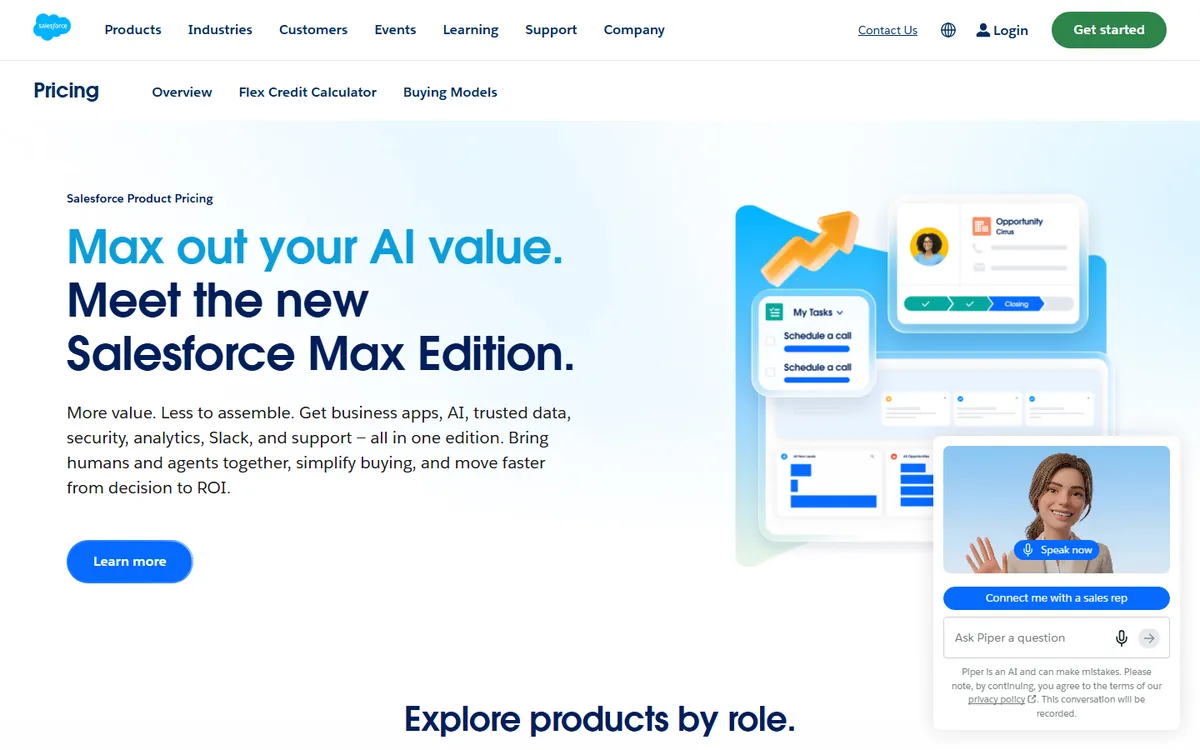 Salesforce’s pricing page, November 2026.
- Per-user pricing that climbs by edition. Salesforce’s own pricing page lists Starter Suite at $25 per user per month, Pro Suite at $100, Core at $195, Advanced at $395 and Max at $550, with most editions billed annually. Add ten users and the math changes fast.
- You need an admin. Salesforce is a platform you build on. Most small businesses just need a CRM that works on Monday. If you need a consultant to add a field, the tool is too big for you.
- Texting and calling are not the center. Home service and local businesses close on the phone. You end up stitching tools together.
- Slow to value. Weeks of setup before your team logs a single useful note, and people go back to spreadsheets.
None of this is a flaw. It is a mismatch. Here is where to go.
How I ranked these
I ranked on four things.
- How fast a small team gets value (days, not months).
- Cost as you add people.
- Whether texting and calls are built in.
- What you give up by leaving Salesforce.
I only show a price when I confirmed it on the vendor’s own page in November 2026. Everything else says “check current pricing.”
Salesforce alternatives, ranked
- 1 Read the full breakdownBest for small business and agencies
GoHighLevel
- CRM, texting, calls, funnels and AI in one login
- Flat plans with unlimited users
- Live in days, not months
- 2 Read the full breakdownBest mainstream pick
HubSpot
- Polished CRM with a free tier for up to 2 users
- Big app ecosystem
- Costs climb by tier and seat
- 3 Read the full breakdownBest for a simple pipeline
Pipedrive
- Visual deal stages
- Fast to learn
- Check current pricing
- 4 Read the full breakdownBest budget option
Zoho CRM
- Free plan listed for up to 3 users
- Large Zoho app family
- Per-user pricing
- 5 Read the full breakdownBest for a lighter sales CRM
Freshsales
- Built for sales teams
- Per-seat pricing
- Check current pricing
- 6 Read the full breakdownBest if you want to stay
Salesforce Starter Suite
- $25 per user per month on Salesforce's page
- Same company, smaller tool
- Easier path than the bigger editions
| Option | Best for | Starts at | Texting/SMS | Biggest catch |
|---|---|---|---|---|
| GoHighLevel | Small businesses and agencies wanting CRM, texting, calls and AI together | $97/month (Starter) plus usage | Built in | No custom objects, and reporting is not Salesforce-level |
| HubSpot | A mid-size team that wants a mainstream CRM | Free CRM for up to 2 users | Check current features | Per seat, with tier jumps |
| Pipedrive | Salespeople who want to see deals move through stages | Check current pricing | Not the focus | Marketing, texting and bigger automations are on you |
| Zoho CRM | Cost-sensitive teams that want customization | Free plan for up to 3 users | Check current features | Can feel busy, and it is per user |
| Freshsales | A lighter sales CRM | Check current pricing | Check current features | Smaller ecosystem and less depth on complex processes |
| Salesforce Starter Suite | Teams that want to stay with Salesforce | $25 per user per month | Check current features | Some of the same complexity can follow you |
1. GoHighLevel
Best for: small businesses and agencies that want CRM, SMS, calls, funnels, forms, booking and AI in one place.
Why switch: flat plans with unlimited users and contacts, so adding a person does not add a seat fee. Texting and calls are built in. You can copy a working setup with a snapshot instead of building from scratch. See my CRM review for what is inside.
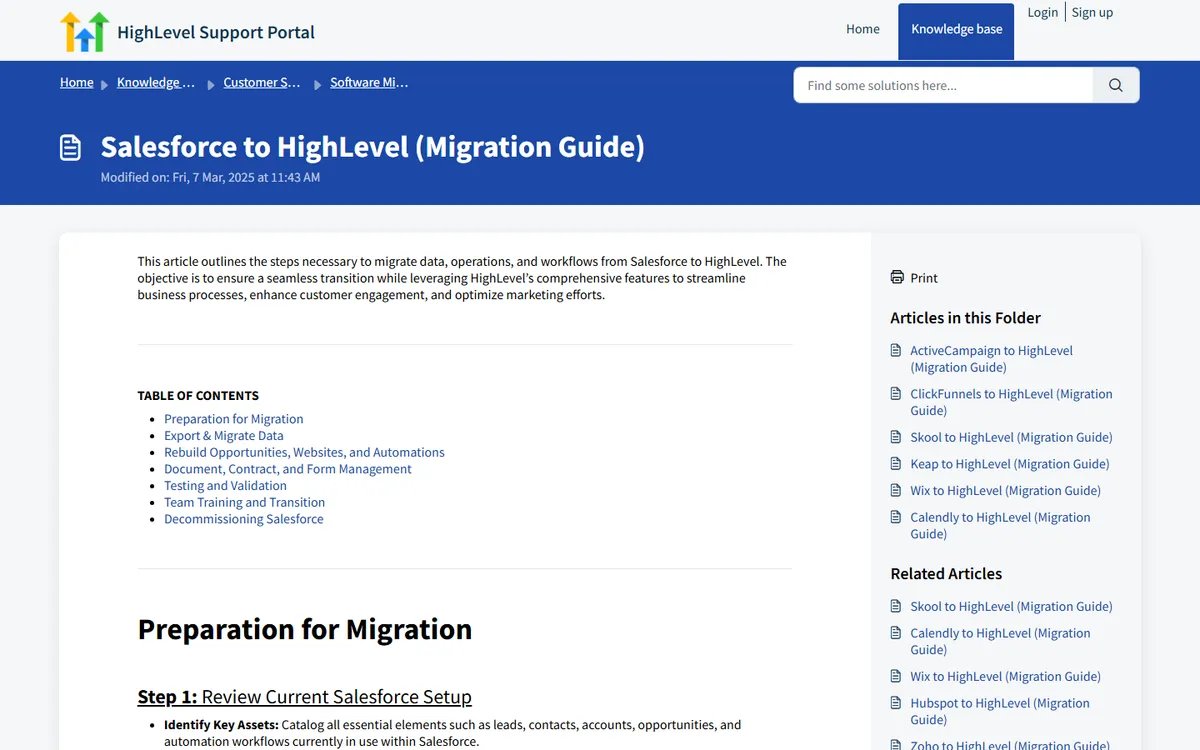 HighLevel’s own Salesforce migration guide, November 2026.
What you give up: deep enterprise customization, custom objects and a huge consulting ecosystem. Reporting is solid but not Salesforce-level. You also pay usage fees for texts, calls, email and AI.
Pricing: as of late 2026, Starter is $97 a month (3 sub-accounts), Unlimited is $297, and the $497 plan adds SaaS mode, per the HighLevel pricing page. Usage is billed separately. See GoHighLevel pricing.
Who should NOT pick it: a large sales organization with complex territories, custom objects and a team that already runs on Salesforce. Stay where you are.
Start your free HighLevel trial 30-day trial · cancel anytime · keep the bonuses I may earn a commission if you sign up through my link, at no extra cost to you. DetailsGoHighLevel for small business and agencies
Pros
- Flat plans with unlimited users and contacts, so adding a person adds no seat fee
- Texting and calls are built in
- A snapshot copies a working setup instead of building from scratch
- Starter is $97/month as of late 2026
Cons
- No deep enterprise customization, custom objects or huge consulting ecosystem
- Reporting is solid but not Salesforce-level
- Usage fees for texts, calls, email and AI
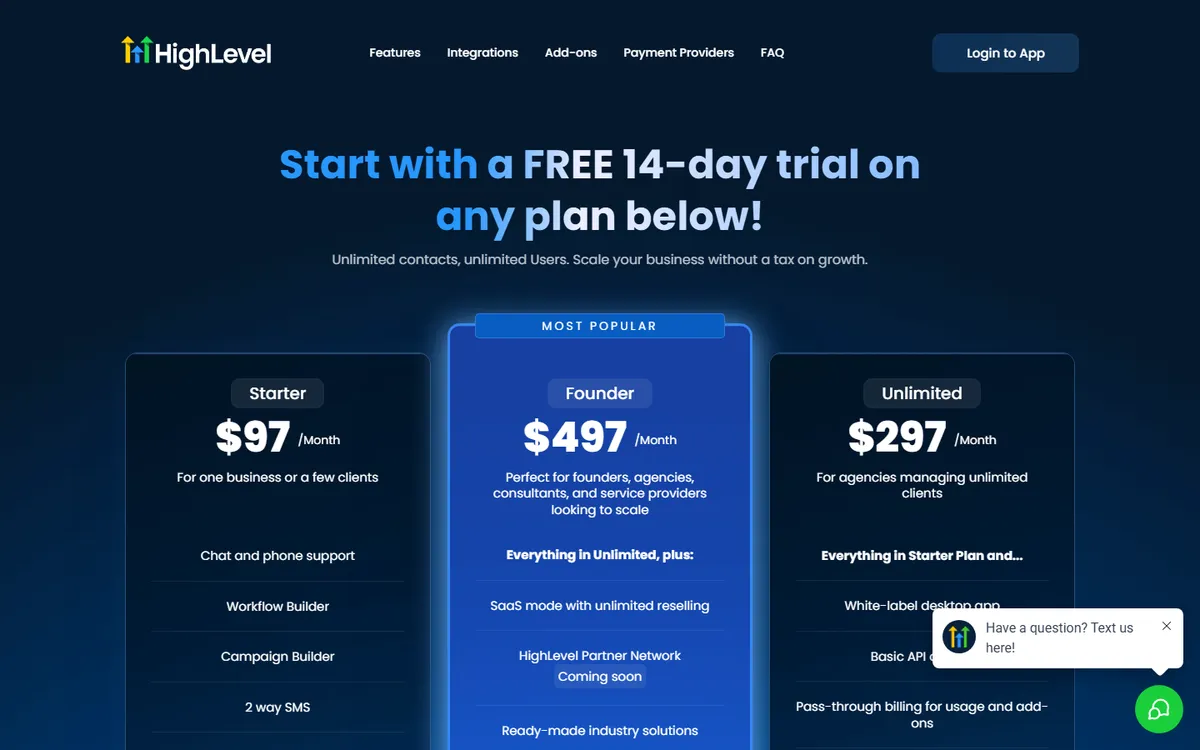 GoHighLevel’s pricing page, November 2026.
2. HubSpot
Best for: a mid-size team that wants a mainstream CRM that people already know.
Why switch: HubSpot is far easier to adopt than Salesforce, and its pricing page lists a free CRM for up to 2 users, so you can try before paying. I compare it directly in GoHighLevel vs HubSpot.
What you give up: it is per seat, and higher tiers cost more and can add onboarding fees. If price was your complaint with Salesforce, you may recreate it. More in HubSpot alternatives.
Pricing: free for up to 2 users, per HubSpot. Paid tiers change, so check the page.
HubSpot for a mid-size team
Pros
- Far easier to adopt than Salesforce
- Its pricing page lists a free CRM for up to 2 users, so you can try before paying
- A big app ecosystem
Cons
- It is per seat, and higher tiers cost more
- Higher tiers can add onboarding fees
- If price was your Salesforce complaint, you may recreate it
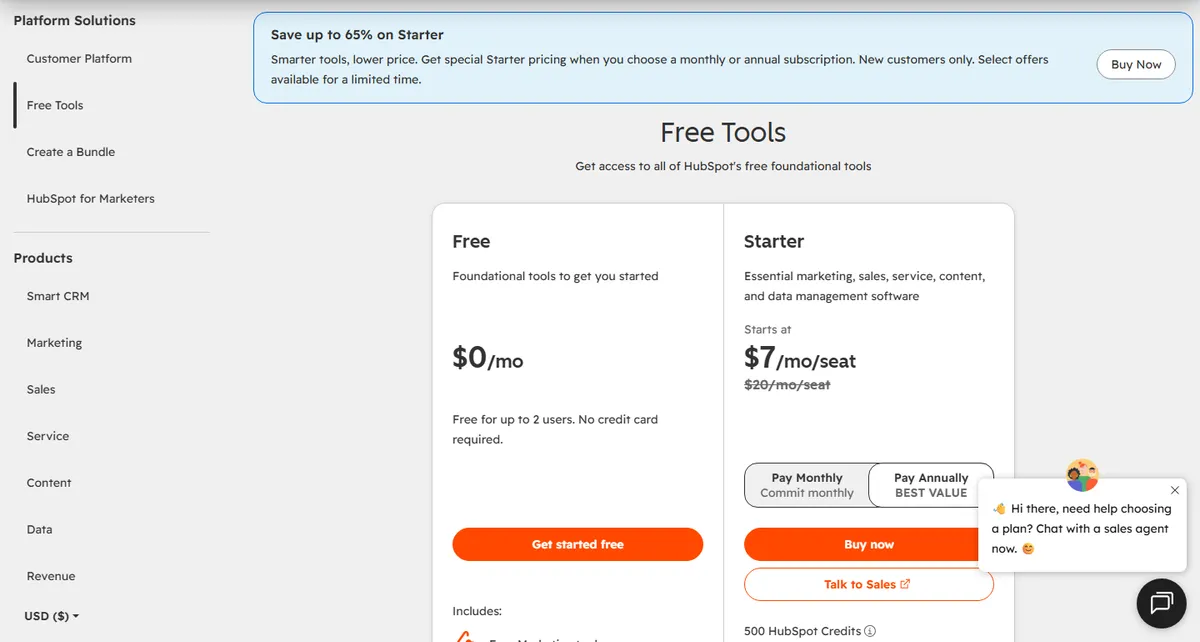 HubSpot’s CRM pricing page, November 2026.
3. Pipedrive
Best for: salespeople who just want to see deals move through stages.
Why switch: it is quick to learn and does one job well.
What you give up: marketing, texting and larger automations are on you. See Pipedrive alternatives for its limits.
Pricing: check current pricing on Pipedrive’s site. My price lookup was blocked, so I will not guess.
Pipedrive for a simple pipeline
Pros
- Quick to learn
- Does one job well
- Visual deal stages
Cons
- Marketing, texting and larger automations are on you
- My price lookup was blocked, so check current pricing
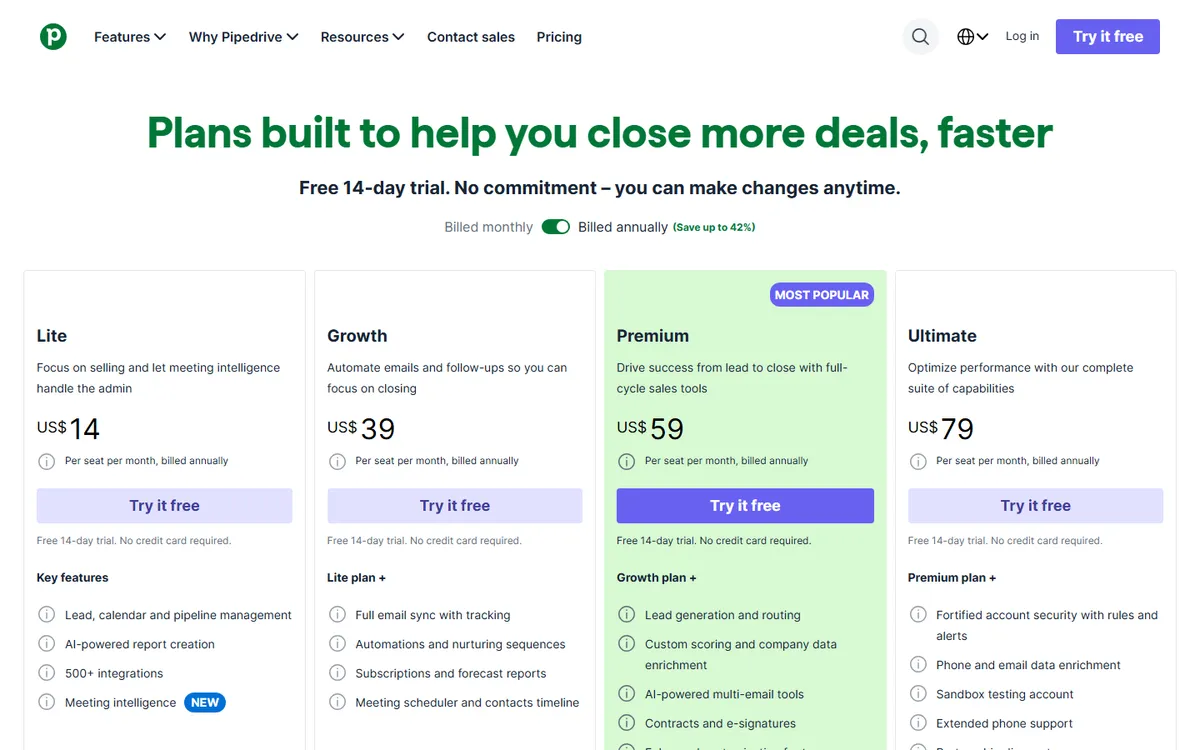 Pipedrive’s pricing page, November 2026.
4. Zoho CRM
Best for: cost-sensitive teams that still want real customization.
Why switch: Zoho’s page lists a forever-free plan for up to 3 users, and a big family of connected apps.
What you give up: it can feel busy, and it is per user. See Zoho CRM alternatives.
Pricing: free plan for up to 3 users per the Zoho page. Paid tier prices did not load for me, so check current pricing.
5. Freshsales
Best for: a sales team that wants a lighter CRM than Salesforce.
Why switch: it is aimed at the same buyer with less setup. I have not run it for clients, so treat this as a shortlist note.
What you give up: a smaller ecosystem, per-seat pricing, and less depth than Salesforce on complex processes.
Pricing: check current pricing on Freshsales’ site.
6. Salesforce Starter Suite
Best for: teams that want to stay with Salesforce but not pay for a big edition.
Why switch: Salesforce’s own page lists Starter Suite at $25 per user per month, billed monthly or annually, and also lists a Free Suite. It is a way to downshift without migrating.
What you give up: you are still on Salesforce, so some of the same complexity can follow you as you grow into higher editions.
Pricing: $25 per user per month (Starter Suite) per Salesforce. It says the numbers are for reference and subject to change.
Quick comparison
GoHighLevel
- Pricing style: Flat plans, unlimited users
- Skip if: You need custom objects
HubSpot
- Pricing style: Per seat, free tier
- Skip if: You hate tier jumps
Pipedrive
- Pricing style: Per seat
- Skip if: You need marketing tools
Salesforce Starter
- Pricing style: $25 per user per month
- Skip if: You want fewer admin tasks
Migration checklist: Salesforce to GoHighLevel
- Export your data. Contacts, accounts, leads and opportunities as CSV from Salesforce. Keep a copy of the originals.
- List your custom fields and objects. Decide which ones you really use. Many small teams use five fields out of fifty.
- Document your flows. Salesforce flows and automation rules do not transfer. Write each in plain words first.
- Flatten accounts and contacts. HighLevel centers on contacts, with companies attached. Decide how your account structure maps over.
- Match your pipeline stages. Use the same stage names so reports stay comparable.
- Import a test batch. 50 records, check the fields, then the rest.
- Start texting registration early. US texting needs A2P registration, which takes time.
- Run in parallel for two weeks. Salesforce read-only until live leads flow through the new setup.
- Cancel at the renewal date, not before. Check your contract term.
You can run steps 1 to 6 inside the 30-day extended free trial through my link. If you would rather skip the setup, my Growth Plan is $97 a month for a white-label HighLevel account set up for you. See the Growth Plan.
Five questions to ask before you leave Salesforce
Before you export anything, answer these. They save more money than any comparison chart.
- How many people actually log in each week? Count real users, not seats. Paying for ten seats while four people work in the tool is the most common waste I see.
- Which three reports do you really read? If you can name them, you can check that the new tool makes them. If you cannot, you were paying for reporting you did not use.
- Who maintains it? If the answer is “a consultant” or “the one person who knows how,” that is a cost and a risk. A simpler tool lets the owner make changes.
- What do your customers do first, call, text or email? I came out of the trades, where the answer is almost always the phone. A CRM that treats calls and texts as side features will cost you leads.
- When does your contract renew? Leaving a month early can mean paying twice. Leaving a month late can mean another year.
If you are honest on those five and Salesforce still wins, stay. That is a fine answer. I would rather you keep a tool that fits than switch because of a blog post, including mine.
How to pick this week
If you are a small business that closes by phone, text and follow-up, trial GoHighLevel. If you want the mainstream choice and a free start, trial HubSpot. If all you do is track deals, trial Pipedrive. If you are a larger team with real complexity, stay on Salesforce and downshift the edition.
Pick the tool that fixes your biggest complaint, not the one with the longest feature list. For agencies, my best CRM for marketing agencies and GoHighLevel alternatives posts go further. Also see ActiveCampaign alternatives if email was the real pain.
Quick wins
Want clients this month? Start here
Set up your own house first. One clear offer for one niche, a simple site, a booking link and your own HighLevel account running the same automations you'll sell. Prospects trust what they can try.
Start with people who already know you
Past employers, old customers, friends who own businesses. Tell them exactly what you set up for small businesses leaving Salesforce and ask for 20 minutes.
Do daily outreach
Calls, emails and DMs to a tight list in one niche. Volume and follow-up beat clever copy.
Demo, don't describe
Build a quick AI agent or missed-call text-back demo in your own HighLevel account and let them try it on the call.
Post what you build
Short screen recordings of real automations. One a day on the platform your buyers use.
Partner with people who own your buyers
Web designers, bookkeepers and software resellers already have the relationship. Trade introductions.
Answer every lead in under a minute
Practice what you sell. Set up your own speed-to-lead automation first.
Work a local area in person
- Pick one area and walk into ten businesses in a row. Ask for the owner, keep it to two minutes and leave a card.
- Bring a one-page printout that shows the problem you fix (missed calls, slow follow-up, no reviews) with their name on it.
- Go back a week later. Most first visits are about being remembered, not closing.
Ask for introductions, not referrals
"Know anyone who could use this?" gets a polite "I'll think about it." Asking to be introduced to a specific kind of person gets names. Set it up when they sign:
"If this works the way I think it will, would you be against introducing me to one or two other small businesses leaving Salesforce you know? I'll give them a free CRM switch checklist."
Then follow up once they're seeing results. With a client you get along with, a little humor works:
"So are you keeping me a secret on purpose, or do you just not like your friends?"
Only joke like that with clients you know well. With everyone else, keep it simple and thank them either way.