 Jonathan Blake

Most “start a business with no money” advice is a list of 50 ideas and no plan. I’ve been on the other side of that. I’ve sold face to face since 2015, I ran a tree service for six years, and now I co-own The Lead Venture, an agency that runs on HighLevel. None of it started with a pile of cash. It started with a phone, a truck and a lot of conversations. If you do want a list, I ranked 25 service business ideas by startup cost.
Short answer: start a service business, because you can sell it before you build it. Pick one service you can deliver this month, talk to 10 potential customers, collect a deposit, do the work, and reinvest the first money into the next tool or hire.
What “no money” actually means
Let me be honest up front. “No money” doesn’t mean no cost. It means you pay in time, effort and some awkward conversations instead of dollars.
Here’s what that looks like in practice:
- No inventory. You sell a service, so there’s nothing to buy and store.
- No office. You work from your phone and a laptop, or the truck.
- No big software bill. Free tools cover the first month.
- A lot of selling. This is the part that costs you. Plan on hours every day, not a weekend.
Customers fund a service business. Your savings shouldn’t have to.
If you can’t spare 10 or more hours a week, don’t pretend the plan will work faster. It won’t.
A no-money service business
Pros
- No inventory, because you sell a service
- No office, you work from your phone and a laptop
- No big software bill, since free tools cover the first month
Cons
- A lot of selling, hours every day
- You need 10 or more hours a week
- Plan on about 30 days before first money
Is a service business right for you? A 60-second check
Answer these honestly:
| Question | If yes | If no |
|---|---|---|
| Can you do something people already pay for (a trade, a skill, a past job)? | You have a service | Pick a skill to learn first |
| Can you talk to a stranger for 5 minutes? | You can sell | Practice on friends first, then strangers |
| Do you have a phone and a way to get online? | You can start today | Use a library or borrow a laptop |
| Can you wait 30 days for first money? | You can afford the runway | Keep your job and run this nights and weekends |
| Are you okay hearing “no” 8 times out of 10? | You’ll survive week 2 | Rework the pitch before you quit anything |
Keep your job if you need the paycheck. I’d rather you start this at night than quit and panic.
Service business ideas that fit a $0 to $100 budget
You want something where the customer pays you to do the work, and the work can start with tools you already own. These four are the ones I know:
- A local service. Cleaning, pressure washing, lawn care, junk removal, dog walking. You need a phone and basic gear. I’m not going into trade-specific advice here since The Lead Venture covers home services in depth.
- A lead generation or marketing service for local businesses. You find customers for a business that already has a service. See my guide on how to start a marketing agency.
- An AI and automation service. You set up missed-call text-back, follow-up and booking for a small business. See how to start an AI agency.
- A skill-based freelance service. Bookkeeping, video editing, copywriting, virtual assistance. You sell hours or a monthly package.
Pick the one that matches what you already know. Your first sale is much easier when you can say, “I’ve done this before.”
The plan, step by step
Step 1: pick one service and one customer
“I do marketing for everyone” sells nothing. “I make sure dentists in my town never miss a new-patient call” sells.
Write one sentence: “I help [type of business] get [result] by [what you do].”
Cost: $0. Time: one hour. The mistake: picking three services because you’re afraid to choose.
Step 2: sell before you build
Don’t make the website, the logo or the business cards yet. Make a one-page offer: what they get, how long it takes, the price and the deposit. A Google Doc or a note on your phone is fine.
Then talk to people. The first 10 conversations are your market research and your sales pipeline at once.
Cost: $0. Time: 1 to 2 weeks. The mistake: building for a month before talking to a customer.
Step 3: get paid upfront
A deposit turns a nice conversation into a real customer.
Ask for 50% before you start, and the rest on delivery. For a monthly service, take the first month upfront. This covers your costs and protects you from the customer who says yes and then disappears.
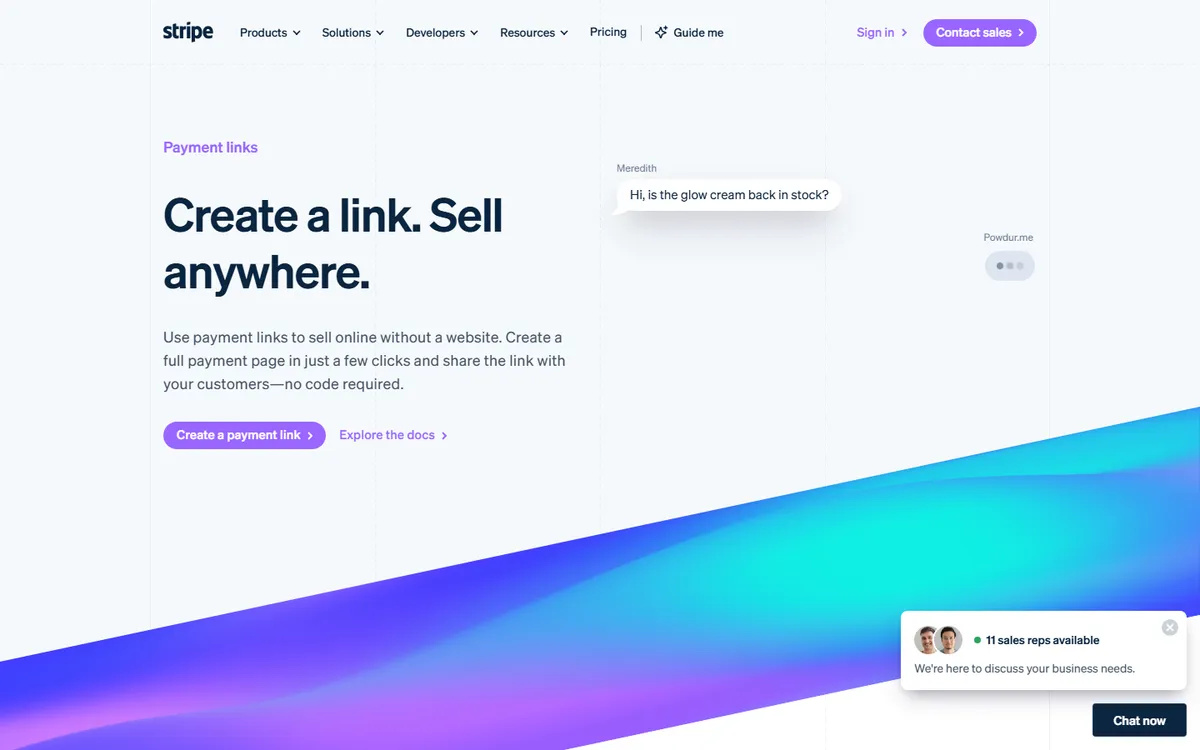 Stripe’s Payment Links page. A link like this is all you need to take a deposit without a website, November 2026.
Cost: $0. Time: 5 minutes per customer. The mistake: working for free “to build trust” with someone who has no plan to pay.
Step 4: deliver, then collect proof
Do the work well. Take before and after photos, ask for a short written review, and ask for the name of one other business owner they know.
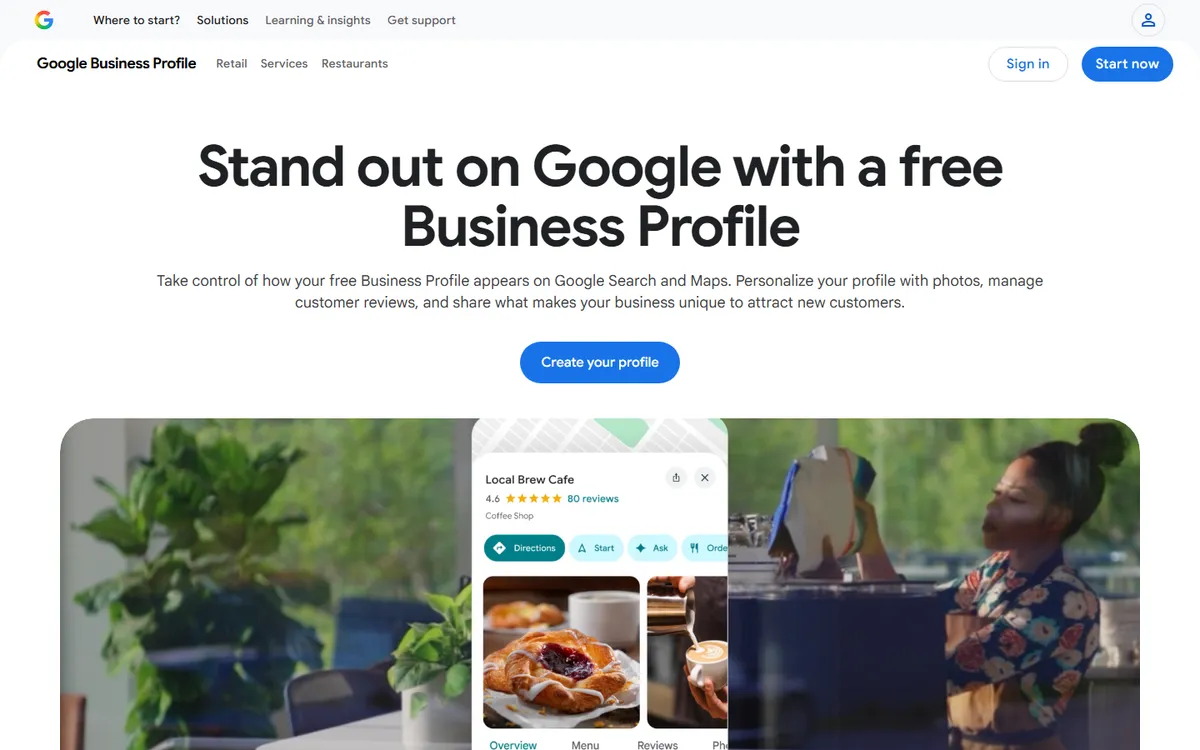 Google Business Profile is free, and it’s where your first reviews should go, November 2026.
Cost: whatever you spend on materials, covered by the deposit. Time: the job itself. The mistake: finishing the work and never asking for the review.
Step 5: reinvest
Put the first money into the one thing that will get you the next customer: a better phone plan, a domain and email, a CRM, or a part-time helper. Don’t buy ads before you have a repeatable way to close.
Your $0 to $100 starter budget
Here’s a realistic budget. Everything on the free side works today.
| Item | Cost | Needed on day 1? |
|---|---|---|
| Phone and number you already own | $0 | Yes |
| Free email address and Google Doc offer sheet | $0 | Yes |
| Free invoicing and payment link (Stripe, PayPal, Square or Wave) | $0 upfront, fees per payment | Yes, before you get paid |
| Free scheduling link (Google Calendar or Calendly free) | $0 | Yes |
| Business name check and local registration | $0 to $50, varies by state | Before you take real money |
| Domain and business email | About $15 to $25 a year | No, after first deposit |
| Simple one-page site (free builder) | $0 | No |
| Business cards or door hangers | $10 to $25 | No |
| Total | $0 to $100 |
Paid tools can wait. Once you have a paying customer you can afford the next level, and that’s the only time I’d upgrade.
Break even calculator
Plug in your own numbers. The starting values are examples, not data about your business.
-
Break-even jobs per month
Add your numbers
-
Break-even revenue per month
Add your numbers
-
Contribution margin per job
Add your numbers
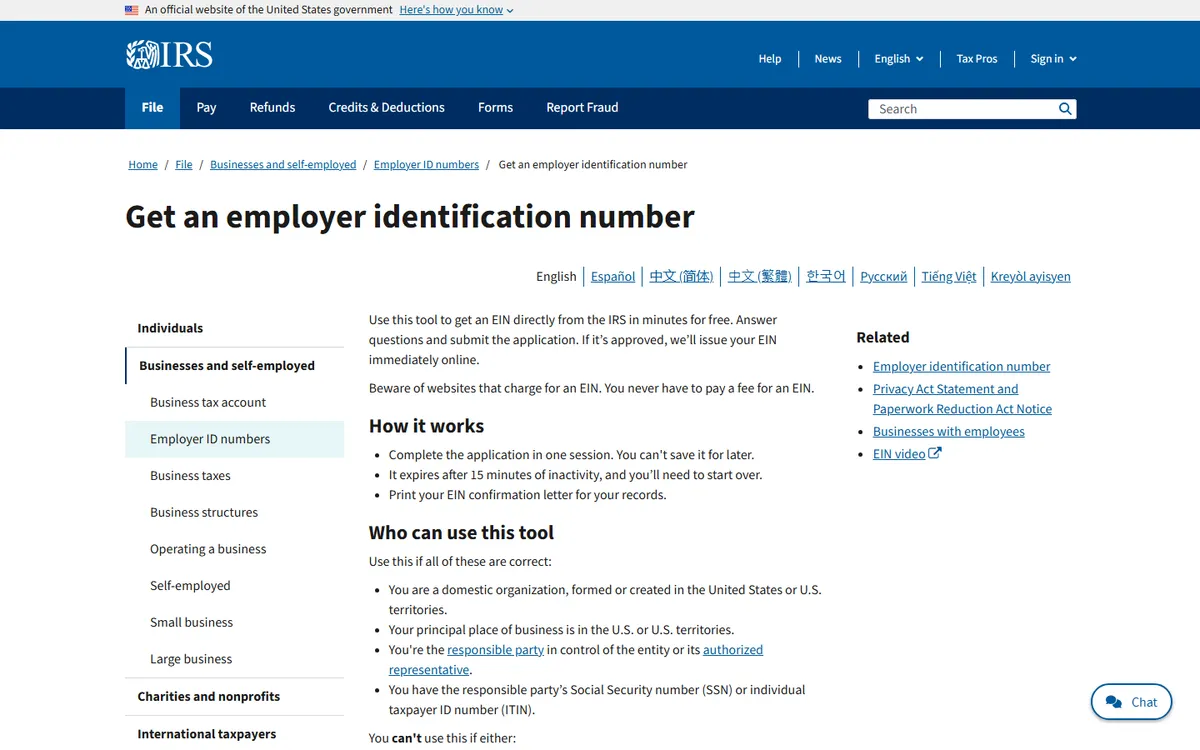 The IRS page for getting an EIN online. It’s free, so skip any site that charges you for one, November 2026.
Scripts for your first 10 conversations
You don’t need a perfect pitch. You need to start talking. Here are three scripts I’d use.
To someone you know:
“Hey [name], I’m starting a [service] business for [type of business]. I’m taking on my first few customers at [price]. Do you know anyone who’d want [result]? I’d love an introduction.”
To a stranger at their business (in person):
“Hi, I’m [name]. I help [type of business] [result]. I’m not here to sell you today. Can I ask you a couple of quick questions about how you handle [problem]?”
Then ask: “What happens when [the problem] happens right now?” and “What does that cost you in a month?” Listen. They’ll tell you what to sell them.
To close:
“Here’s what I’d do for you: [one sentence]. It’s [price]. I start when you put down [deposit]. Does that work?”
Then stop talking. The first person to speak loses.
If they say “let me think about it,” ask: “What would you need to see to feel good about it?” It’s a real question and it usually surfaces the real objection.
How to get paid upfront (and not feel weird about it)
Most beginners skip the deposit because it feels pushy. It isn’t. Dentists, personal trainers and wedding photographers all do it.
- Say it as a normal step. “I take 50% to hold your spot and the rest when we’re done.”
- Send a payment link while you’re still on the call. A link sent later gets forgotten.
- Put the deposit and scope in one short written agreement. A one-page document both of you sign is enough to start. Have a local professional look at your template before you scale.
- For monthly work, charge the first month upfront. Then bill on the same day each month.
If someone won’t pay a deposit for a clear, fair price, treat that as information.
When a tool starts to earn its keep
For most of the first month I’d use free tools only. Once you have a client and your service involves following up with leads, answering missed calls or booking appointments, that’s when a real system starts to make sense.
That’s where HighLevel comes in for me. It bundles the CRM, phone, texting, calendar and automations in one account. The plans start at $97 a month as of late 2026 (see my pricing breakdown), but the trial lets you build the setup first and decide later. Use it once you have a customer to build it for, not before. If you don’t have a customer yet, the money is better spent on conversations.
Your first 30 days
This is the section to save.
Week 1: pick and write.
- Choose your service and customer type.
- Write your one-sentence pitch and your one-page offer.
- Set up a free email, a payment link and a scheduling link.
- Make a list of 50 people and businesses you can reach: friends, family, ex-coworkers, local shops.
Week 2: talk.
- Have your first 10 conversations using the scripts above.
- Write down every objection and every price they react to.
- Adjust your offer after conversation 5, not conversation 50.
Week 3: close and collect.
- Offer your first two or three customers a clear price and ask for the deposit.
- Do the first job and take proof (photos, numbers, a screenshot).
- Ask for a short review and one introduction.
Week 4: reinvest and repeat.
- Spend part of the first money on the one tool that saves you the most time.
- Ask each customer for an introduction, not a vague “any referrals?”
- Block the same daily time for outreach so the pipeline keeps moving.
If you want my longer plans for the two business types I know best, read how to start an AI agency and how to start a marketing agency. Both are built on the same sell-first approach.
Mistakes that kill most beginners
- Building before selling. A logo and a website won’t get you a customer. A conversation will.
- Offering everything. One service, one customer type, one price.
- Working for free forever. Free for one case study is fine. Free to everyone is a hobby.
- Skipping the deposit. It protects you and filters out people who weren’t serious.
- Buying tools to feel like a business. Every dollar should either find a customer or save you time on a paying one.
- Quitting too early. Most people stop after 3 or 4 conversations. The business lives in conversations 5 through 20.
- Ignoring the rules. Check local licensing, insurance and tax requirements before you take real money. They vary by state and trade.
There’s no guaranteed income in any business, and I’m not going to promise one. What I can say is that this order of operations (sell, collect, deliver, reinvest) costs you the least if it doesn’t work and compounds fastest if it does.
Quick wins
Want clients this month? Start here
Set up your own house first. One clear offer for one niche, a simple site, a booking link and your own HighLevel account running the same automations you'll sell. Prospects trust what they can try.
Start with people who already know you
Past employers, old customers, friends who own businesses. Tell them exactly what you set up for local service businesses and ask for 20 minutes.
Do daily outreach
Calls, emails and DMs to a tight list in one niche. Volume and follow-up beat clever copy.
Demo, don't describe
Build a quick AI agent or missed-call text-back demo in your own HighLevel account and let them try it on the call.
Post what you build
Short screen recordings of real automations. One a day on the platform your buyers use.
Partner with people who own your buyers
Web designers, bookkeepers and software resellers already have the relationship. Trade introductions.
Answer every lead in under a minute
Practice what you sell. Set up your own speed-to-lead automation first.
Work a local area in person
- Pick one area and walk into ten businesses in a row. Ask for the owner, keep it to two minutes and leave a card.
- Bring a one-page printout that shows the problem you fix (missed calls, slow follow-up, no reviews) with their name on it.
- Go back a week later. Most first visits are about being remembered, not closing.
Ask for introductions, not referrals
"Know anyone who could use this?" gets a polite "I'll think about it." Asking to be introduced to a specific kind of person gets names. Set it up when they sign:
"If this works the way I think it will, would you be against introducing me to one or two other local service businesses you know? I'll give them a free missed-call audit."
Then follow up once they're seeing results. With a client you get along with, a little humor works:
"So are you keeping me a secret on purpose, or do you just not like your friends?"
Only joke like that with clients you know well. With everyone else, keep it simple and thank them either way.
Bottom line
You don’t need money to start a service business. You need an offer, a list of people to talk to, a way to get paid and the patience to do the unglamorous part. Start with the one sentence, make your first 10 calls this week, and don’t spend a dollar until a customer has paid you a deposit.
Start your 30-day extended free trial 30-day trial · cancel anytime · keep the bonuses I may earn a commission if you sign up through my link, at no extra cost to you. Details